

Menu Translation in 37 Languages: A Multilingual Strategy for Tourist Venues
Bodrum, Antalya, Cappadocia, Istanbul — a multilingual menu strategy for venues in Türkiye's tourist regions. Which languages to offer, how to translate, and how to protect restaurant terminology.
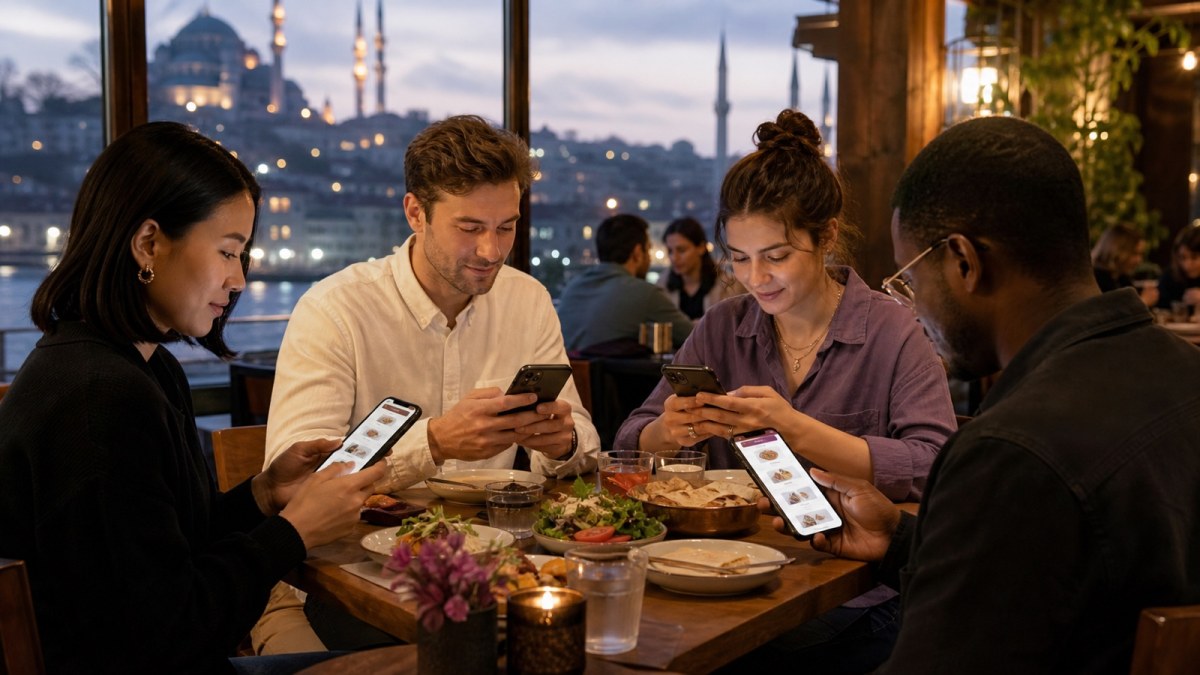
In Türkiye's tourist regions, hospitality is built on international guests. Germans in Bodrum, Russians in Antalya, Japanese travellers in Cappadocia, Arab and European visitors in Istanbul — each of them expects a menu in their own language. A printed menu can't deliver that; a QR menu delivers 37 languages automatically. This article covers which languages to choose, how to keep translation quality high and how to protect restaurant terminology.
Türkiye Tourism Statistics (2025)
Annual visitor numbers (Ministry of Culture and Tourism data):
| Country | Annual Visitors | Target Language |
|---|---|---|
| Russia | ~6.5M | Russian (RU) |
| Germany | ~5.5M | German (DE) |
| United Kingdom | ~3.5M | English (EN) |
| Bulgaria | ~2.5M | Bulgarian (BG) |
| Iran | ~2.0M | Persian (FA) |
| Ukraine | ~1.5M | Ukrainian (UK) |
| Netherlands, Poland | ~1.0M+ | Dutch, Polish |
| Saudi Arabia, UAE | ~1.0M+ | Arabic (AR) |
| China, Japan, Korea | ~500K+ | ZH, JA, KO |
The regional mix matters: on the coast, Russian and German come first; in Istanbul's Sultanahmet, Arabic takes priority; in Cappadocia, Chinese and Japanese lead.
Which Languages Do You Need? A Regional Strategy
Mediterranean Coast (Antalya, Side, Belek)
- Turkish + English (the baseline)
- Russian (highest volume)
- German (second highest)
- Dutch, Polish, Bulgarian (seasonal)
- Ukrainian
Aegean Coast (Bodrum, Marmaris, Kuşadası)
- Turkish + English
- German (top priority)
- Dutch
- French (Greek and French visitors)
- Italian (cruise passengers)
Istanbul (Sultanahmet, Beyoğlu)
- Turkish + English
- Arabic (Gulf countries)
- Persian (Iran)
- Russian
- Chinese, Japanese, Korean (Asian visitors)
Cappadocia / Pamukkale
- Turkish + English
- Chinese + Japanese + Korean
- Russian
- Spanish + French
Translation Quality: Restaurant Terminology Pitfalls
Machine translation often stumbles on restaurant menus. The most common pitfalls:
Pitfall 1: Regional Dish Names
- "Döner" → keeps its name in English, untranslated
- "Simit" → not "Turkish bagel", but "simit" with a short explanation in brackets
- "Manti" → "manti" (in italics) with "Turkish dumplings" as the explanation
- "Lokum" → "lokum" + "Turkish delight"
Pitfall 2: Units of Measure
- "Kadeh" (for wine) → glass
- "Şişe" → bottle
- "Porsiyon" → portion / serving
- "Tabak" / "büyük tabak" → plate / large plate
Pitfall 3: Cooking Methods
- "Tandır" → "tandoor", kept as is
- "Kömürde" → "char-grilled"
- "Kazan" → "kazan" + an explanation (cauldron-cooked)
- "Pide" → "pide", kept as is
Professional AI translation systems protect this terminology automatically. QrMenum's Content & Translation Assistant works from a restaurant-terminology glossary across all 37 languages.
Keeping Your Brand Voice in 37 Languages
Turkish original: "Kömürde pişirilmiş yumuşak bonfile, evde yoğurdumuzla harmanlanan baharat sosu. 8 dakikada tabağınızda."
English: "Tender char-grilled tenderloin tossed with our house-made yogurt and spice sauce. On your plate in 8 minutes."
German: "Zarter, holzkohlegegrillter Rinderfilet mit unserer hausgemachten Joghurt-Gewürzsauce. In 8 Minuten auf Ihrem Teller."
Every language keeps the same brand tone, the same level of detail and the same call to action — the hallmark of a professional translation system.
AI Translation in 37 Languages vs Manual Translation
| Dimension | Manual | QrMenum AI |
|---|---|---|
| Cost (37 languages) | ~₺25,000+ | Included in the Assistant Add-on |
| Time | 2–4 weeks | Seconds |
| Updates | Manual, all over again | Automatic |
| Terminology | Depends on the translator | Glossary-protected |
| Brand voice | Varies from translator to translator | Consistent |
Automatic Language Detection
In a professional system, the guest never has to tap an "English" button. The menu opens automatically in the language set on their phone:
- German guest → phone set to German → the menu opens in German
- Russian guest → phone set to Russian → the menu opens in Russian
- Switching language manually is always possible (language picker, top right)
The experience feels like a "premium hotel" — every guest is welcomed in their own language.
Conclusion
For a tourist venue, a menu in 37 languages is no longer a luxury — it is the baseline. AI translation removes the cost and time barriers that manual translation could never overcome. QrMenum's automatic translation into 37 languages comes with the Assistant Add-on, with no per-language fee: restaurant terminology is protected and your brand voice stays consistent in every language.
QR menu fundamentals: What Is a QR Menu? The Complete Guide →
The Content & Translation Assistant in detail: QrMenum AI Assistants →


